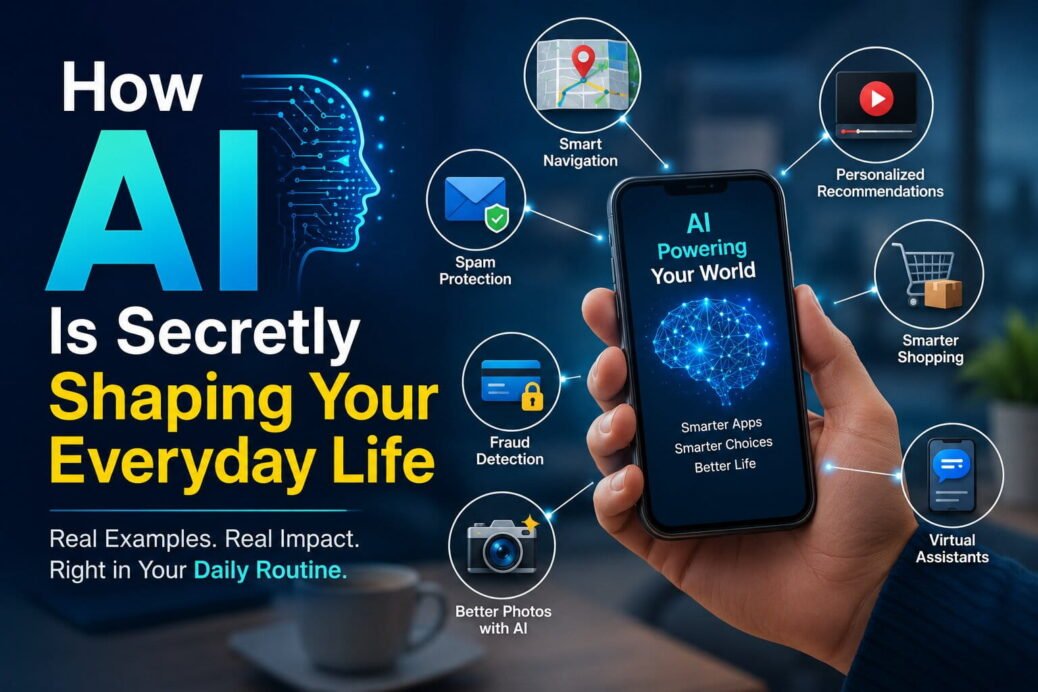
You probably interacted with AI at least a dozen times before lunch today. The moment you unlocked your phone with your face, scrolled through a social media feed tailored specifically to you, or asked your voice assistant about the weather, AI was doing the work. It’s so seamless that most of us never notice.
That’s kind of the point.
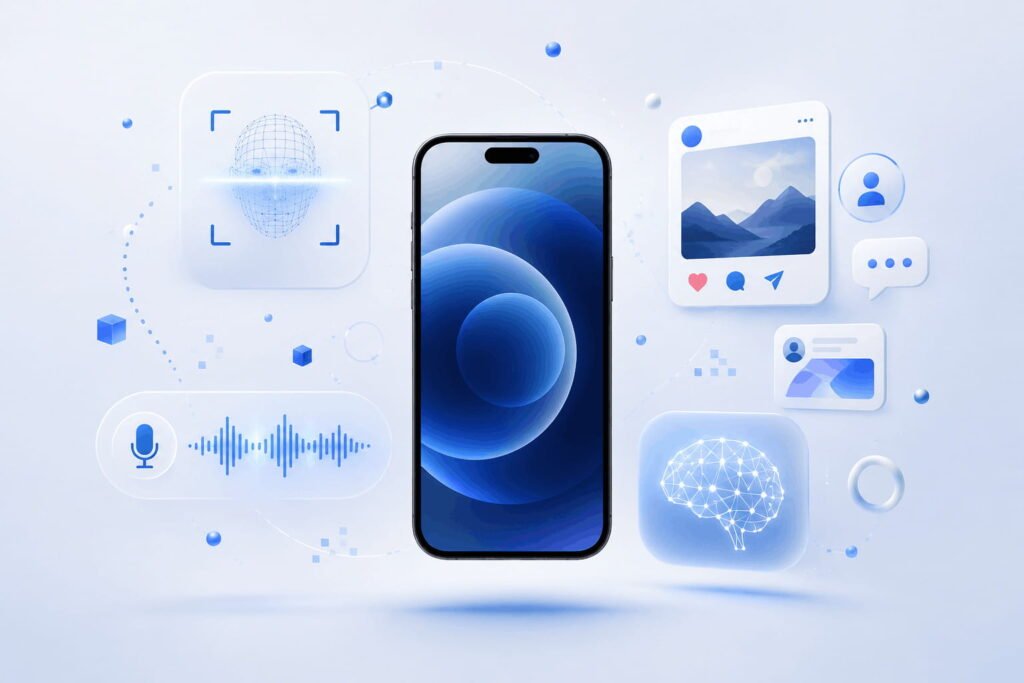
When people hear “artificial intelligence,” they tend to picture humanoid robots or some distant sci-fi future. But AI isn’t coming. It’s already here, baked into the apps you use, the car you drive, the way your bank protects your money. It shapes what you watch, what you buy, and even how your doctor spots a health problem early. And it’s doing all of this quietly, in the background, without asking for credit.
This post breaks down where AI actually shows up in your daily routine, from your morning commute to your streaming queue to your fitness tracker. We’ll also look at how it’s transforming major industries like healthcare, finance, and education. And we’ll talk about the ethical questions that come with all of it, because those matter too.
AI in Your Digital World: The Unseen Personalization Engine
Every time you scroll through your phone, artificial intelligence is working quietly in the background. You might not see it, but AI is making countless decisions about what you see, hear, and discover online.
Your Personalized Online Experience
Ever wonder why your social media feed feels so tailored to your interests? That’s AI at work. Platforms like Facebook, Instagram, and X analyze every interaction you make. Each like, share, comment, and even how long you pause on a post feeds into sophisticated AI algorithms that learn what captures your attention. The result?
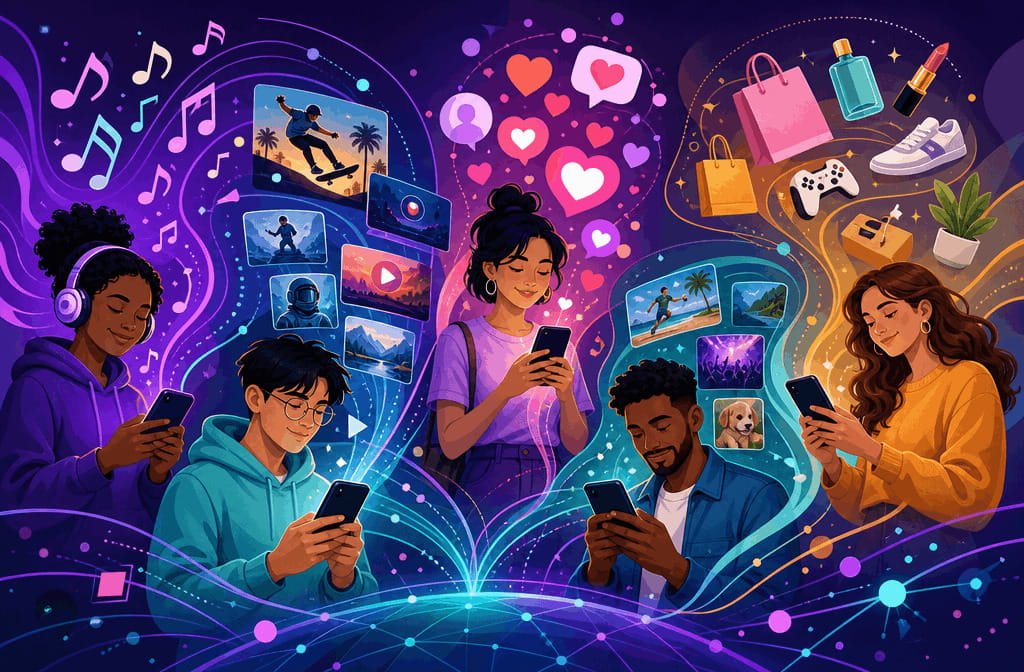
A feed that feels almost eerily personalized to your tastes.
Streaming services have mastered this personalization game too. When Netflix suggests your next binge-worthy series or Spotify creates a playlist that perfectly matches your mood, artificial intelligence in daily life is making those predictions. Netflix’s AI is so effective that a staggering 80% of what users watch comes directly from its recommendation system. The platform doesn’t just guess randomly. It studies your viewing habits, the time you watch, what you finish, and even where you stop watching to build a detailed picture of your preferences.
Shopping online? AI is your invisible sales assistant. Amazon and SHEIN use powerful AI applications in daily life that track your browsing history, past purchases, and real-time clicks. These systems predict what you might want before you even know you want it. The impact is significant. AI-powered recommendation systems can boost conversion rates by up to 30%, turning casual browsers into buyers through smart suggestions.
Smarter Communication and Information Access
Writing emails has become easier thanks to AI. Tools like Grammarly don’t just catch typos. They use natural language processing to understand context, suggest better word choices, and help you communicate more clearly. Your phone’s spell check does the same thing, learning from your writing style over time.
Your inbox stays cleaner because of AI too. Spam filters work tirelessly behind the scenes, analyzing suspicious patterns and protecting your account from phishing attempts and unwanted messages. These filters learn constantly, adapting to new threats as spammers change their tactics.
Search engines represent one of the most impressive AI examples in real life. Google doesn’t just match keywords anymore. Its AI scans billions of web pages, understands the context of your question, and delivers the most relevant results in milliseconds. It even personalizes ads based on your search history, creating a unique experience for every user.
Voice assistants like Siri, Alexa, and Google Home have become household companions. These digital helpers use natural language processing to understand your spoken commands, even with different accents and phrasings. They manage your calendar, answer questions, control smart devices, and learn your preferences over time. How AI affects everyday life becomes clear when you realize you’re having natural conversations with algorithms that genuinely understand what you need.
AI in Your Physical Environment: Smartening Up Your Surroundings
AI doesn’t just live in your phone or computer. It’s quietly working all around you, transforming the spaces where you live, travel, and take care of yourself. These physical applications of artificial intelligence in daily life often go completely unnoticed, yet they’re reshaping how comfortable, safe, and efficient our everyday environments have become.

Intelligent Homes and Devices
Your home is getting smarter, even if you haven’t noticed. That sleek Face ID feature on your iPhone? It’s powered by sophisticated machine learning algorithms that map and compare your facial features every time you unlock your device. Apple’s FaceID technology is remarkably secure, with just a one in a million chance of being fooled by another person’s face.
Smart thermostats like Nest have revolutionized home comfort. These devices don’t just respond to your commands. They learn. After a few weeks of observing when you adjust the temperature and what settings you prefer at different times, AI-powered thermostats begin anticipating your needs. They optimize heating and cooling schedules to match your daily habits, reducing energy costs while keeping you comfortable.
AI examples in real life extend to home security as well. Modern security cameras equipped with AI can distinguish between your neighbor’s cat wandering across your porch, the Amazon delivery person dropping off a package, and an actual intruder. They alert you only when something genuinely suspicious occurs, eliminating false alarms that plagued older systems.
Even your robotic vacuum is smarter than you think. These compact cleaners use AI algorithms to map your home’s layout, calculate the most efficient cleaning paths, and remember obstacles from previous sessions. Each cleaning cycle teaches the device something new about your space, helping it avoid getting stuck under furniture or tangled in cables.
Revolutionizing Travel and Commute
Step outside your home, and AI continues working for you. Google Maps doesn’t just show you a static route anymore. Its AI constantly monitors real-time traffic patterns and weather conditions, rerouting you around accidents, construction zones, or sudden congestion. What used to take local radio traffic reports now happens automatically.
Modern cars are packed with AI applications in daily life that enhance safety. Adaptive cruise control adjusts your speed based on the vehicle ahead. Lane-keeping assistance gently steers you back if you drift. These driver-assist technologies use AI to process information from multiple sensors simultaneously, reacting faster than human reflexes alone could manage.
Self-driving vehicles represent the cutting edge of this revolution. Tesla’s Autopilot and Waymo’s autonomous taxis use advanced machine learning to navigate complex traffic scenarios. These systems analyze countless data points every second, making split-second decisions about acceleration, braking, and steering. Studies show these vehicles often have fewer accidents per mile driven compared to human-operated cars.
Behind the scenes, entire cities are getting smarter. AI-powered traffic management systems adapt to changing conditions instantly, optimizing traffic light timing citywide and rerouting vehicles during accidents or special events. These intelligent systems can potentially reduce wait times by up to 25%, easing daily commutes for millions.
Enhancing Personal Health and Fitness
Your fitness tracker knows you better than you might realize. Wearable devices leverage AI to do far more than count steps. They analyze your unique workout patterns, provide personalized exercise recommendations tailored to your fitness level, and accurately track sleep cycles by detecting subtle changes in movement and heart rate throughout the night.
These devices monitor heart rate variations and stress levels continuously. The AI algorithms processing this data can detect potential health issues early, identifying patterns that might indicate disease risks before symptoms become obvious. Some wearables now suggest proactive lifestyle adjustments based on these insights, like recommending more rest when stress indicators rise or suggesting adjustments to your exercise routine when recovery patterns change.
AI has transformed how we understand and manage our personal wellness. What once required expensive lab tests and doctor visits now happens quietly on your wrist, providing continuous health monitoring that helps you make better decisions about your body every single day.
AI Behind the Scenes: Driving Industries and Innovation
While you’re scrolling through social media or asking Alexa about the weather, AI is doing much heavier lifting behind closed doors. Major industries are being transformed in ways most people never see. Let’s pull back the curtain.
Transforming Finance and Banking
Every time you swipe your card or check your balance online, AI is watching. Not in a creepy way. In a protective way.
Banks process millions of transactions every second. Humans couldn’t possibly monitor all that activity for fraud. AI systems can. They analyze patterns, compare behaviors, and flag anything suspicious before your account gets drained. That declined card at 3 AM in a different country?

AI likely saved you from fraud.
Then there are robo-advisors. These AI-powered investment tools manage your money based on your goals and risk tolerance. No expensive financial advisor needed. They create tailored portfolio recommendations and adjust automatically as markets change. Apps like Betterment and Wealthfront have made investing accessible to millions who never thought they could afford it.
Trading tools powered by AI analyze market trends faster than any human could. They spot patterns, predict movements, and help investors make smarter decisions. Some algorithms execute trades in milliseconds, reacting to news before a person could finish reading the headline.
Customer service has changed too. AI chatbots now handle routine banking tasks 24/7. Balance inquiries, fund transfers, password resets. No waiting on hold for 20 minutes. The bot answers instantly, freeing human agents to handle complex issues that actually need a person’s touch.
Advancements in Healthcare
Healthcare might be where AI makes its biggest impact. We’re talking about saving lives, not just saving time.
AI algorithms can now analyze medical images like X-rays and MRIs with remarkable accuracy. They spot early signs of cancer, detect neurological diseases, and identify issues radiologists might miss. The AI doesn’t replace doctors. It gives them a second set of eyes that never gets tired or distracted.
Robotic surgery systems use AI to perform incredibly precise procedures. These machines have steadier “hands” than any surgeon. They make smaller incisions, cause less trauma, and help patients recover faster. A surgeon still controls everything, but the AI assists with precision humans simply can’t match.
Drug discovery used to take decades. AI has cut that time dramatically. Algorithms analyze genetic data, molecular structures, and thousands of potential compounds to identify promising drug candidates. They predict which treatments might work for specific diseases and even personalize medicine based on individual genetic profiles.
Telemedicine has exploded recently. AI-driven virtual assistants now provide immediate medical advice and help determine how urgent your symptoms are. Live in a rural area far from specialists? AI makes healthcare more accessible by offering preliminary guidance and connecting you with the right resources.
Revolutionizing Education and Learning
Education is getting personal. Not every student learns the same way or at the same pace. AI-powered platforms work like interactive tutors, assessing each student’s strengths and weaknesses. They customize the curriculum, adjust difficulty levels, and focus on areas where that specific student needs help.
Teachers spend countless hours on administrative tasks. Attendance tracking. Grading quizzes. Entering data. AI handles these repetitive jobs, giving educators more time for what matters: actually teaching and connecting with students.
AI also creates more inclusive classrooms. Text-to-speech helps visually impaired students. Speech-to-text assists those with hearing difficulties. Translation tools break down language barriers. Technology that once seemed futuristic is now helping every student access education equally.
The Future of AI and Ethical Considerations
AI integration is accelerating across healthcare, workplaces, and entire smart cities. The possibilities are exciting. The challenges are real.
Data privacy tops the list of concerns. AI needs data to learn and improve. But whose data? How is it used? Who controls it? These questions don’t have simple answers.
Bias in AI systems is another serious issue. If the data used to train an AI reflects existing prejudices, the AI will too. Facial recognition systems that work poorly for certain ethnicities. Hiring algorithms that favor one gender. These problems aren’t hypothetical.
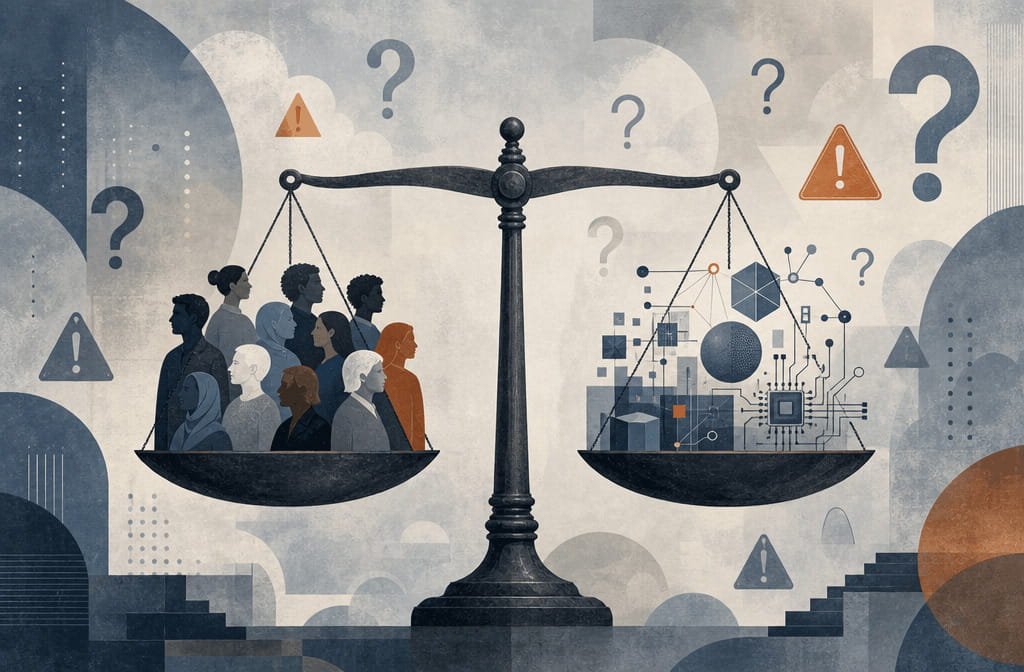
They’re happening now.
Transparency matters. When an AI makes a decision that affects your loan application, job prospects, or medical treatment, you deserve to know how and why. “The algorithm said so” isn’t good enough.
Governments and organizations are responding. AI ethics committees are forming. Regulations are being drafted. The goal is ensuring these powerful technologies align with human values and respect individual rights, not just corporate profits.
Understanding these developments isn’t optional anymore. AI shapes your world whether you notice it or not. Hey Amico offers a platform where curious minds can explore technology, AI, and the future in plain language everyone can understand. Because the better we understand these tools, the better equipped we are to shape how they’re used.